- Mar 15
Mid-March Magic: Wild Garlic, Soil Therapy, and the Secrets of a Happy Gut
- Chloe Archard
- 0 comments
We're halfway through March, and the wild garlic is properly up now in the woods behind the house, that unmistakable green scent that means spring is no longer a promise but a fact. Willow and I walked through a carpet of it yesterday morning, and I found myself, as I always do at this time of year, feeling quietly grateful.
The days are noticeably longer now, the Spring Equinox arrives on 20th March, after which daylight officially outpaces darkness, and the hedgerows are responding visibly. Blackthorn is beginning to flower, white against bare branches, and the woodland floor is an extraordinary patchwork of green.
This is the letter I most enjoy writing each year: the gut health deep-dive. If you've ever wondered why what you eat affects how you feel so profoundly: your energy, your mood, your skin, your immunity - this is where the explanation lives.
The Most Evidence-Based Therapy You've Never Tried
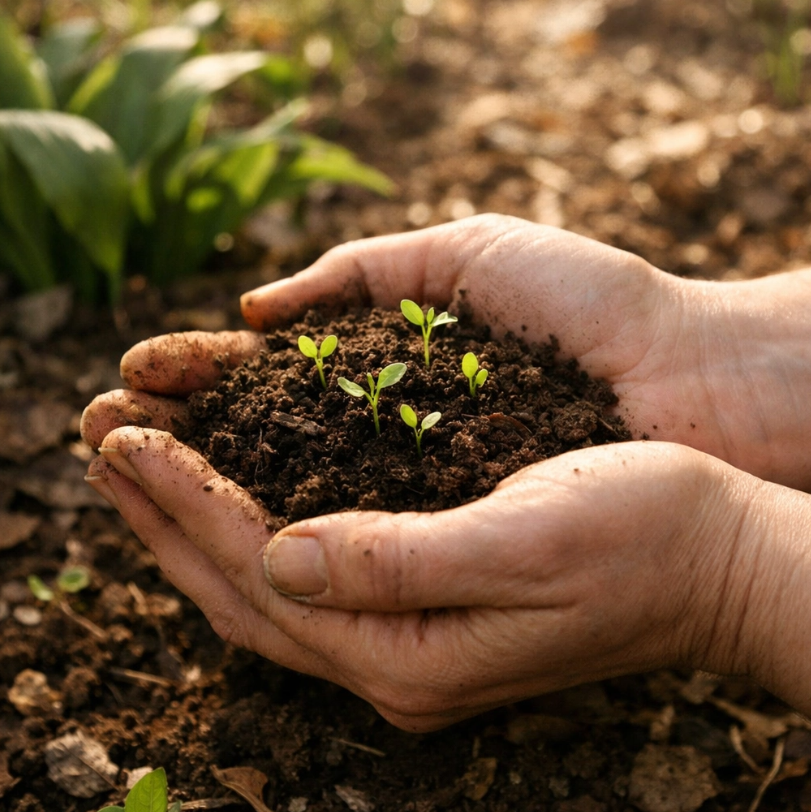
If you're spending time outdoors this week, I'd invite you to notice the soil itself. After months of cold and compression, March earth has a quality of readiness : loosened by frost and rain, beginning to breathe. There's something genuinely restorative about putting your hands in it, even briefly.
This isn't romantic nonsense; it's neuroscience. Soil contains Mycobacterium vaccae, a naturally occurring bacterium that research suggests may stimulate serotonin production and reduce anxiety. Gardening, it turns out, is evidence-based therapy.
Your invitation this week: Spend five minutes doing something with your hands in nature: weeding, planting, foraging, or simply running soil through your fingers. Notice how your nervous system responds. No agenda, no outcome. Just five minutes of contact with the earth.
Your Gut Is Talking: And You Should Listen
Let's talk about why this matters so much. Your gut microbiome - the community of trillions of bacteria, fungi, and other microorganisms living in your digestive tract - is, in many ways, the most important ecosystem you'll ever manage.
It's involved in digesting food, producing vitamins (including B12, K2, and several B vitamins), regulating immune function, synthesising neurotransmitters including the majority of your serotonin, and communicating with your brain via the vagus nerve in a relationship researchers call the gut-brain axis.
Read that again: the majority of your serotonin - the neurotransmitter most associated with mood, sleep quality, and emotional resilience - is produced in your gut, not your brain.
This is why what you eat affects how you feel so profoundly. It's not just about energy from calories. It's about the conversation happening between your gut bacteria and every other system in your body.
The Gold Standard: Diversity
Microbiome diversity : the range of different species present : is one of the most consistently evidenced markers of good health across the research literature. A diverse microbiome is associated with better immune resilience, more stable mood, lower systemic inflammation, and reduced risk of a range of chronic conditions.
A low-diversity microbiome, by contrast, is associated with IBS, anxiety, poor immunity, and metabolic dysfunction.
The single most powerful dietary driver of microbiome diversity is fibre : and specifically, a variety of different types of fibre from a variety of different plant sources.
The landmark American Gut Project found that people who ate 30 or more different plant foods per week had significantly more diverse microbiomes than those eating fewer than 10. This doesn't mean 30 different vegetables; herbs, spices, nuts, seeds, and legumes all count.
What This Means in Practice
Here's what the evidence tells us matters most:
Diversity over quantity : eating a wider variety of plants matters more than eating large amounts of the same ones.
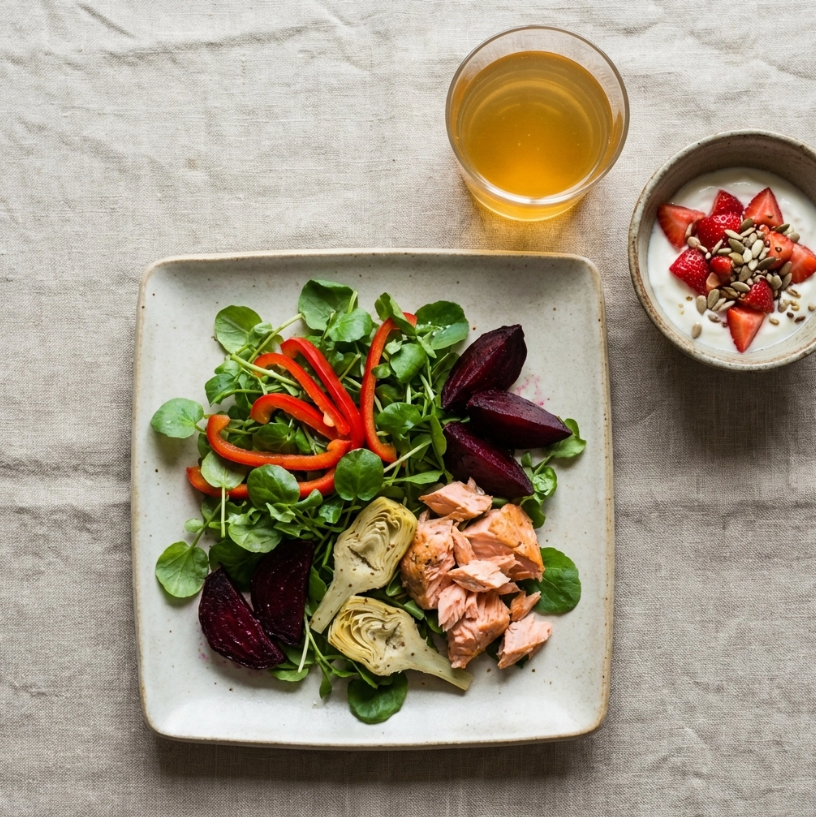
Fermented foods : live yoghurt, kefir, sauerkraut, kimchi, and miso actively introduce beneficial bacteria. A 2021 Stanford study found fermented foods increased microbiome diversity more effectively than a high-fibre diet alone.
Prebiotic foods : leeks, onions, garlic, Jerusalem artichokes, and oats feed existing beneficial bacteria. These are some of the most valuable foods for gut health you can eat.
Polyphenols : found in dark berries, green tea, dark chocolate, and olive oil, these plant compounds act as fuel for beneficial gut bacteria and have anti-inflammatory effects in the gut lining.
Processed foods and artificial sweeteners : both reduce microbiome diversity rapidly and measurably. This is one of the most clearly evidenced findings in gut research.
Seasonal Gut-Friendly Superstars
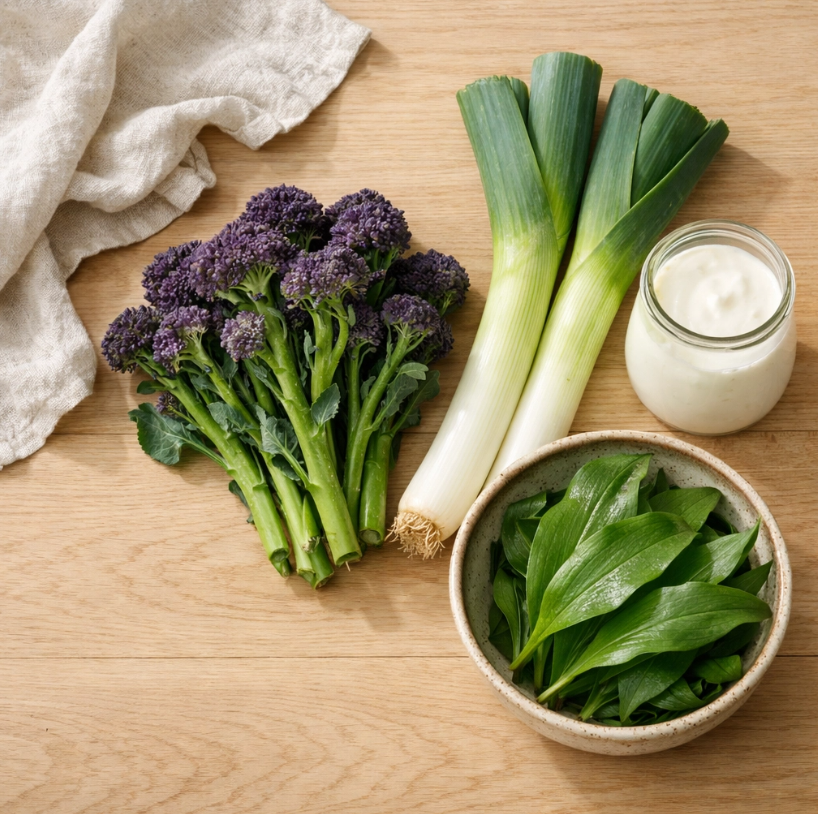
Purple sprouting broccoli is peaking this month and is an exceptional gut health food : rich in glucosinolates, which feed beneficial bacteria, and sulforaphane, a compound with potent anti-inflammatory properties.
Leeks, still at their best, are among the finest prebiotic vegetables available. They contain inulin, a specific type of soluble fibre that feeds Bifidobacteria and Lactobacilli : two of the most beneficial bacterial species in your gut.
Wild garlic, if you can find it, provides sulphur compounds with antimicrobial properties that support a balanced gut environment. The season is short : six to eight weeks : which makes it all the more worth paying attention to.
Kefir deserves special mention. Add it to your morning routine if you haven't already : the evidence for its impact on microbiome diversity is among the strongest of any single food. Start with a small amount (a quarter cup) and increase gradually if you're not used to fermented foods.
Movement and Your Microbiome
There's a connection between movement and gut health that's less widely known than it deserves to be, and I find it genuinely compelling.
Regular physical activity - and walking in particular - measurably increases microbiome diversity. The mechanism involves improved gut motility (the rhythmic contractions that move food through the digestive tract), reduced intestinal transit time, and lower systemic inflammation, all of which create a more hospitable environment for beneficial bacteria.
A 2019 study found that lean individuals who exercised regularly had measurably higher levels of short-chain fatty acid-producing bacteria : the species most associated with gut lining integrity, reduced inflammation, and healthy immune function : than sedentary individuals, independent of diet.
Movement and nutrition work synergistically on gut health; neither alone produces the same result as both together.
The 10-Minute Post-Lunch Walk
If your step count is lower than you'd like, the most effective intervention is almost never a dramatic target : it's identifying the walk that feels genuinely enjoyable and building from there.
Here's a simple habit worth trying this week:
After lunch, I will walk for 10 minutes before returning to my desk. No phone. Just movement and whatever is around me.
Ten minutes after lunch has two evidence-based benefits beyond the steps themselves: it significantly reduces the post-meal blood sugar spike (important for sustained afternoon energy and metabolic health) and it provides a genuine mental break that improves cognitive performance in the hours that follow.
It's one of the highest-return habits available for the time invested.

Your small action for this week: Choose one thing from this article that genuinely resonates. The post-lunch walk. The kefir. The soil therapy. Just one thing, done consistently, for the next seven days. Notice what shifts.
Chloe x
P.S. The Cellular Reset: Built Around This Science
Everything in this article: the fibre, the seasonal produce, the movement - is the science that underpins The Cellular Reset: Reverse Your Biological Age in 8 Weeks.
The programme is built around real food, gut-supportive nutrition, and habits that compound.
No calorie counting. No deprivation. Just a step-by-step system that makes nourishing yourself genuinely straightforward, and that happens to make you feel extraordinarily well in the process.
The programme is designed to incorporate exactly the gut health principles we've explored today.
- £97
The Cellular Reset: Reverse Your Biological Age in 8 Weeks
- £7
Real Food 365
- £28
28-Day Revitalise
- £17